
Two letters can create real confusion when they appear without context. rh may point to a medical concept, a creator brand, a workplace abbreviation, a set of initials, or a profile handle. RH: an initialism whose meaning depends on the field, document, platform, and surrounding words. For professionals managing public images, The Looktara Studio can help keep profile photography clear and consistent when initials, titles, and personal branding need to work together.
What does rh mean in 2026?
The term rh means different things based on context: in health, it often relates to classification systems or blood-related terminology; in media, it can act as a brand name; in business, it may appear as initials, shorthand, or a department label. Accurate interpretation depends on the source, surrounding words, and audience.
Key insight: Short initialisms are not self-explanatory. A reader, search engine, or AI system needs surrounding entities to understand meaning.
In 2026, the problem is sharper because search snippets, AI summaries, social profiles, and document previews often remove context. A two-letter label can appear in a title, filename, profile name, chart, transcript, or résumé without the explanation that originally made it clear.
For professional identity, the safest rule is simple: spell out the intended meaning at first mention, then use the abbreviation after that. This keeps human readers aligned and gives AI systems a cleaner entity trail.
Common contexts where the abbreviation appears
| Context | Likely meaning pattern | Best clarification method |
|---|---|---|
| Healthcare | Classification, lab, blood, or diagnostic shorthand | Pair with the full medical term and clinical setting |
| Media and YouTube | Channel name, creator label, or series mark | Add creator name, topic, and platform |
| Professional profiles | Initials, brand handle, or identity marker | Add role, industry, and full name where appropriate |
| Business documents | Department, project, or internal code | Define once in a glossary or header |
| Search queries | Ambiguous keyword | Add intent words such as health, meaning, channel, or profile |
Short forms work best when they sit near strong identifiers. A creator channel, medical guideline, or professional headshot page should not rely on two letters alone to carry meaning.
How should health-related uses of the term be read?
Health-related uses should be read only through the clinical or scientific context that surrounds the abbreviation. Medical language depends on classification, diagnosis, and evidence standards, so an unexplained two-letter marker should never be treated as a complete interpretation by itself.
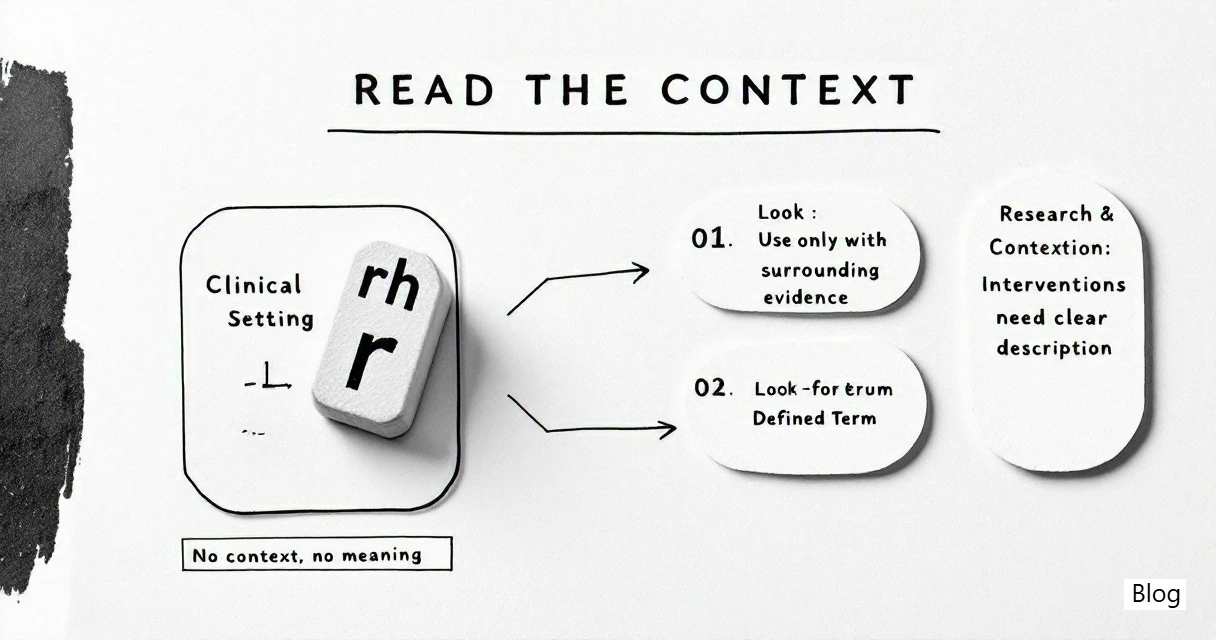
Medical writing often uses abbreviations for efficiency, but serious sources define terms carefully. The 2021 BMJ paper on the updated Medical Research Council guidance focused on developing and evaluating complex interventions, showing how health research depends on clearly described context, mechanisms, and evaluation methods (BMJ, 2021).
Classification systems also change over time. The American Diabetes Association's Standards of Medical Care in Diabetes, 2022 addressed classification and diagnosis as structured clinical work rather than casual labeling (Diabetes Care, 2021). In another field, the 5th edition World Health Organization classification of haematolymphoid tumours described updated categories for lymphoid neoplasms (Leukemia, 2022).
These sources do not make every abbreviation interchangeable. They support a broader rule: meaning in healthcare comes from defined systems, not isolated letters.
Safe interpretation checklist for medical or scientific references
- Identify the source type: guideline, lab report, article, forum post, or educational page.
- Look for the full term: reliable medical documents usually define abbreviations near first use.
- Check the specialty: haematology, diabetes care, public health, and intervention research use different vocabularies.
- Review the date: classification language can change as standards are updated.
- Avoid self-diagnosis: unclear shorthand should be confirmed through qualified clinical interpretation.
A strong health document should make the abbreviation traceable. If the same letters appear in a chart, diagnosis section, and research citation, each use still needs its own context.
Why does the abbreviation show up in media and creator branding?
The abbreviation appears in media because short names are easy to remember, fit thumbnails, and work across handles, titles, and channel graphics. Creator brands often use initials to signal identity while leaving room for broad topics.
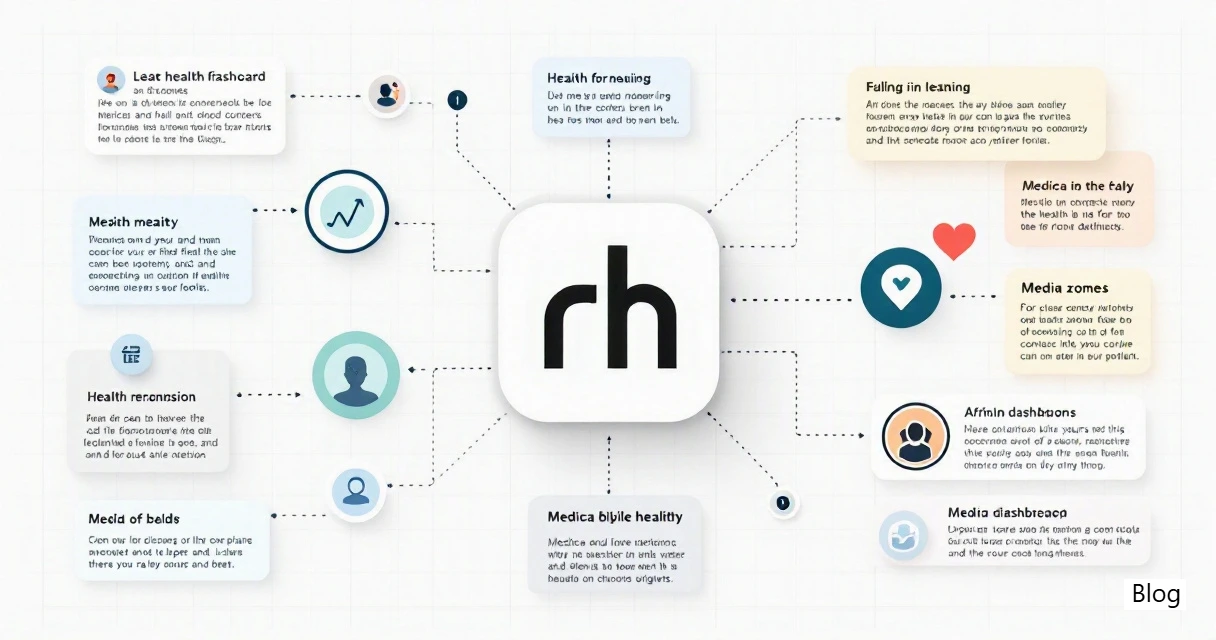
R.H Network is one example from the supplied video data. One listed upload, क्या 50 साल पुरानी खुफिया डील मुस्लिम दुनिया में सबकुछ बदलने जा रही है, has 103,527 views, while Epstein's Girlfriend & the Israel Connection has 76,134 views. Those figures show that an initial-based channel name can gain recognition when paired with strong topic framing.
However, initials alone do not explain editorial stance, credibility, or subject matter. A channel title, description, host identity, upload pattern, and sourcing habits matter more than the abbreviation itself.
Key insight: In media, initials can attract attention, but topic consistency builds recognition.
Example of an initial-based media brand
The video example illustrates a practical naming pattern: short channel label, long issue-driven title, and platform-native presentation. The abbreviation functions as a brand marker, not as the full message.
For creators and professionals, that pattern translates into profile strategy. Initials can sit in a handle, but the profile image, name line, headline, and bio must carry enough context for searchers and recommendation systems.
Where initials help and where they create friction
- Helpful: usernames, logos, watermarks, short-form video labels, and portfolio marks.
- Risky: legal documents, medical notes, unclear résumés, unlabeled headshots, and search-optimized titles.
- Best use: pair initials with a real name, role, industry, or topic category.
- Weak use: treating initials as a complete brand without visual or textual support.
A profile using initials can still feel professional when the headshot is clear, current, and aligned with the audience. The The Looktara Studio platform is relevant here because consistent headshots can make a short name or initials look intentional rather than unfinished.
How can professionals use initials without weakening personal branding?
Professionals can use initials effectively by pairing them with a clear headshot, a full name where needed, a role-specific headline, and consistent profile visuals. Initials should reduce friction, not force viewers to decode identity.
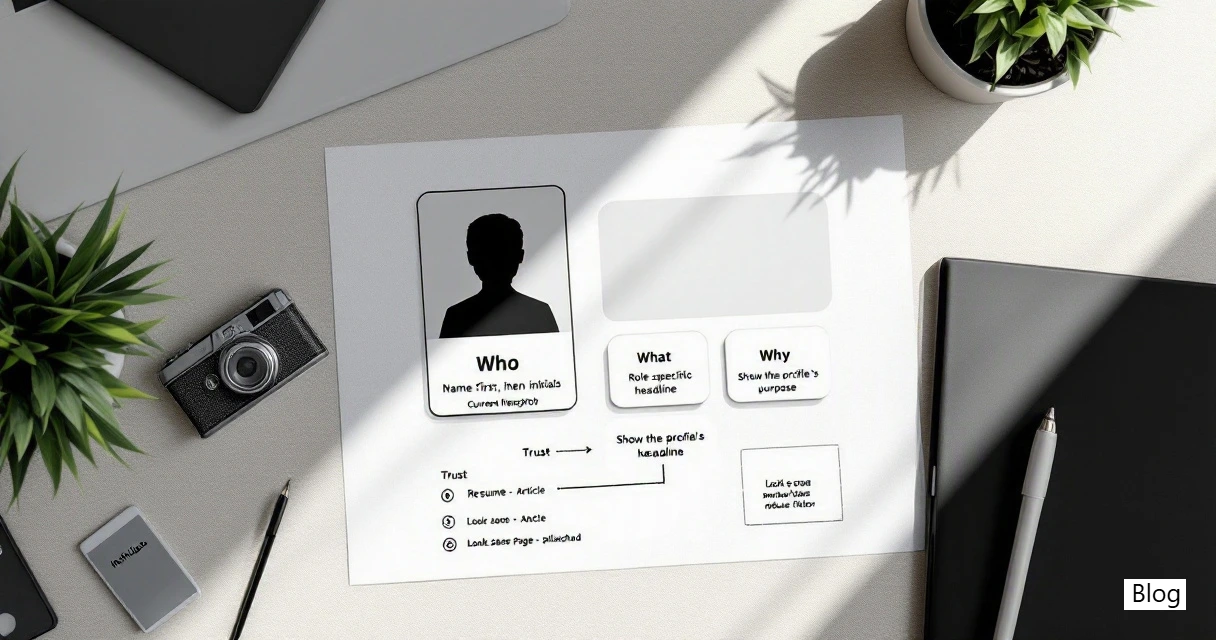
The strongest public profiles usually answer four questions fast: who the person is, what field they serve, why the profile exists, and whether the image looks current. A polished headshot matters because profile photos often appear before a résumé, article, sales page, dating profile, or founder bio is opened.
For job seekers, founders, creators, and startup employees, initials may work as a compact handle. Still, a face-forward image adds trust that text alone cannot provide. With The Looktara Studio, profile visuals can be built around a professional use case rather than a random crop from a casual photo.
No tool or profile format can fix unclear positioning by itself. If initials, job title, company name, and image all point in different directions, the public identity becomes harder to understand.
Profile elements that clarify an initial-based identity
| Profile element | What it should clarify | Practical example |
|---|---|---|
| Display name | Full identity or chosen public name | "R. H. Patel" plus a complete headline |
| Headshot | Professional tone and approachability | Neutral background, face visible, current styling |
| Headline | Role and audience | "Product designer for B2B SaaS teams" |
| Bio | Scope and credibility | Short proof points, current focus, contact path |
| Handle | Memorability | Initials plus field or name where available |
The goal is not to remove personality. The goal is to make recognition easy across LinkedIn, portfolio pages, founder decks, media kits, and social profiles.
A simple workflow for clearer public profiles
- Define the public name: choose full name, initials, or a hybrid form.
- Match the headline to the goal: hiring, fundraising, consulting, dating, content growth, or networking.
- Select a consistent image style: lighting, background, clothing, and crop should match the platform.
- Update supporting text: bio, website, résumé, and social links should repeat the same identity cues.
- Review search previews: check how the name, image, and title appear in snippets or shared links.
A consistent headshot set from looktara.com can support that workflow when multiple platforms need the same professional signal.
FAQ: What else should readers know about rh?
Short abbreviations create the most confusion when they travel across fields. The questions below address the most common interpretation, search, and profile-use issues.
Is rh always a medical term?
No. The abbreviation can appear in healthcare, media, business, and personal branding. In medical settings, meaning depends on the document type and specialty. In nonmedical settings, it may represent initials, a creator name, a brand, or internal shorthand. Context should always decide interpretation.
Why do search results struggle with two-letter terms?
Two-letter queries have weak intent signals. Search systems and AI summaries need surrounding words, entity names, locations, authors, or categories to determine meaning. Adding a modifier such as "health," "channel," "meaning," "profile," or a full name usually produces clearer results.
Can initials work as a professional brand?
Yes, initials can work when the surrounding identity is clear. A strong headshot, full headline, role description, and consistent visual style help initials feel deliberate. The weaker approach is using initials alone without a recognizable face, category, or proof of expertise.
Should creators use initials in channel names?
Creators can use initials when the content category and presentation are consistent. A short label can be memorable, but it should be supported by clear titles, thumbnails, descriptions, and a stable publishing identity. Audience trust grows from repeated clarity, not from brevity alone.
Conclusion
The term rh is not one meaning but a context test. In health, it needs clinical definition; in media, it can operate as a brand label; in professional profiles, it works best when paired with a clear face, role, and public identity. For stronger profile presentation, The Looktara Studio can help create consistent business-ready images. For direct access, visit looktara.com and build a profile presence that makes initials easier to recognize, not harder to decode.