
TL;DR
Remini fits an enhancement-first task, while Aragon AI is positioned for generating professional headshots. Buyers should compare matched source photos where permitted and verify current checkout prices, usage rights, and deletion terms before purchasing.
A sharper photo and a newly generated headshot solve different problems. Remini vs Aragon AI is therefore a workflow decision before it's a quality contest: does an existing portrait need improvement, or does a professional profile need a new image? Looktara also belongs on the shortlist for readers considering professional brand imagery. The useful comparison starts with the intended result, then checks likeness, cost, and terms rather than assuming every AI photo tool does the same job.
Photo enhancement: Improving an existing image rather than treating a new portrait as the primary deliverable.
AI headshot generation: Creating professional-style portraits from supplied reference images.
Choose the workflow first. Compare the finished photographs second.
Table of Contents
Remini vs Aragon AI: buyer-fit comparison
Remini is the enhancement-oriented choice in the supplied research, while Aragon AI is explicitly positioned as an AI headshot generator.
That distinction matters for a LinkedIn refresh. A suitable existing photograph may need only an enhancement pass. A profile requiring a different business presentation calls for evaluating portrait generation instead.
The available research includes a December 2024 comparison describing Remini's limited customization beyond basic enhancement, plus 2026 search excerpts positioning Aragon around professional headshots. Those excerpts aren't a complete November 2026 feature audit. They don't establish current prices, upload requirements, delivery times, or refund terms.
A practical shortlist by intended outcome
The strongest shortlist groups tools by the task a buyer needs completed, not by a universal ranking.
| Platform | Reason to consider it | Best-fit evaluation task | Details still needing verification |
|---|---|---|---|
| Looktara | A relevant additional option for a professional brand-imagery shortlist | Compare the intended visual style with the brand brief | Current workflow, packages, and usage terms |
| Remini | Enhancement-oriented positioning in the supplied research | Assess improvements to an existing portrait | Current generation options, controls, and billing |
| Aragon AI | Dedicated AI headshot-generator positioning | Assess newly generated business portraits | Current packages, turnaround, and refund conditions |
A job seeker can judge the result against a LinkedIn profile requirement. An entrepreneur may instead need images that suit a website biography and speaking profile. A creator should define the intended setting before treating either result as a suitable brand photograph.
No hands-on winner is claimed here. The supplied research contains no matched-photo test, verified output counts, or measured likeness scores.
How do their portrait workflows differ?
The portrait workflows differ chiefly in whether the buyer improves an existing photograph or evaluates newly generated headshots. A fair comparison separates those tasks before judging results:
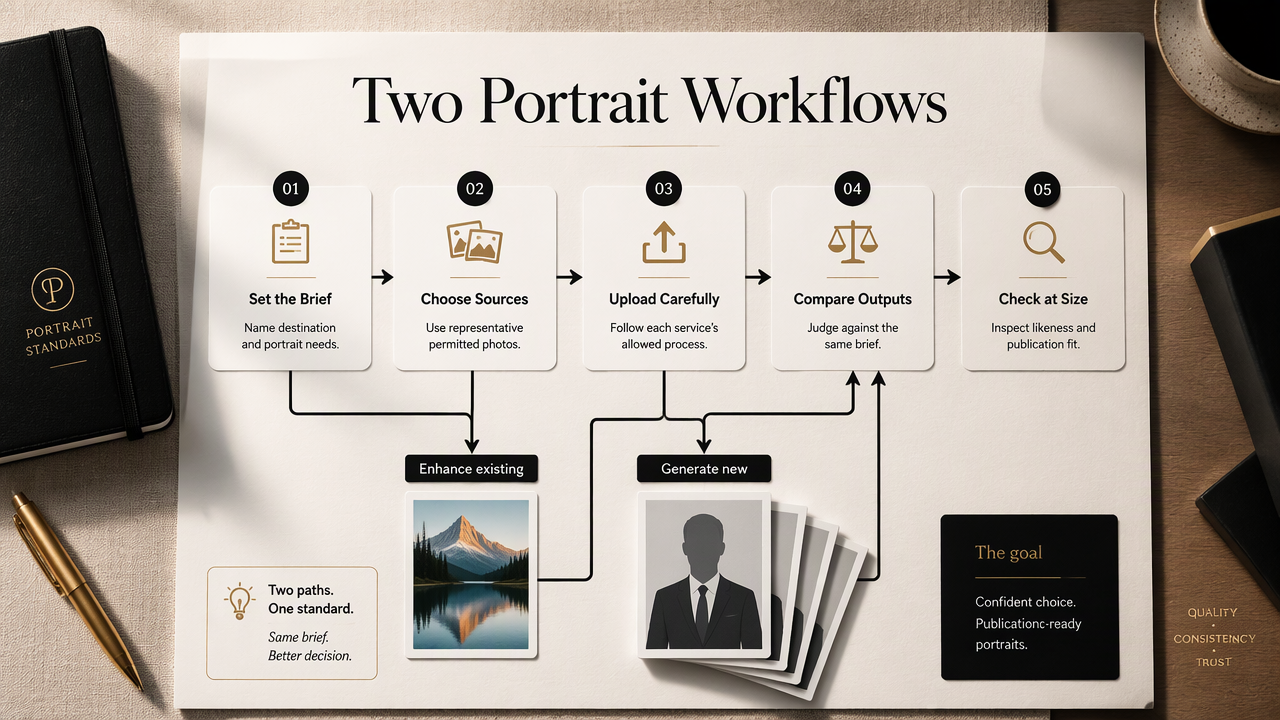
- Define the required portrait and its destination.
- Select representative source photographs.
- Follow each service's permitted upload process.
- Compare usable outputs against the same brief.
- Inspect likeness and suitability at publication size.
Enhancement starts with a suitable existing image
An enhancement-first workflow makes sense when the source photograph already has the desired expression, clothing, framing, and setting. The evaluation question is narrow: does processing make that photograph more useful while keeping the person's appearance recognizable?
For example, a remote worker may already have a well-framed portrait with an appropriate background. That candidate can assess an enhancement result without also asking the software to invent a different professional presentation.
- Check facial texture at full size.
- Compare the processed result with the original.
- Review the final crop as a small profile thumbnail.
The research's older Remini excerpt supports an enhancement-focused comparison, but it shouldn't be treated as a complete description of every mode available in 2026.
Generation starts with a target professional presentation
A generation-first workflow makes sense when the deliverable is a new professional-style portrait rather than a revised copy of one photograph. Aragon AI's headshot positioning matches that task, although the supplied material doesn't establish its exact current onboarding steps.
A useful test brief might specify a neutral background, business-casual clothing, and a friendly expression. Those are evaluation criteria, not claims that every service offers those exact controls.
Matched testing means using the same source-photo pool where each service permits it. Identical uploads aren't always possible when requirements differ; any comparison should disclose that difference.
Judge the best usable portrait against the brief, but also record how many results actually meet it.
What should buyers verify about cost and privacy?
Buyers should verify the total purchase price, renewal conditions, output allowance, commercial-use rights, and photo-handling terms before uploading portraits. The supplied research doesn't establish current Remini or Aragon AI prices. A November 2026 decision should therefore rely on live checkout screens and current policies, not older comparison figures.
Compare the purchase, not just the headline price
A useful cost comparison records what the buyer receives and what happens after payment. A displayed price alone doesn't explain whether the purchase renews, whether another attempt costs extra, or whether the desired download is included.
- Record the currency, taxes, and final checkout total.
- Check whether payment is recurring or one-time.
- Confirm included outputs and download conditions.
- Read eligibility rules for refunds or additional attempts.
- Save the terms that apply on the purchase date.
These checks are questions for both services, not assertions about their billing models. Comparing the cost of a usable final portrait is more informative than comparing advertised image quantities.
Check consent, retention, and publication rights
Portrait uploads should be governed by clear permission and an understood data policy. Buyers should check whether source photographs and generated outputs are retained, how deletion works, and whether submitted images may be used for model training.
Commercial permission deserves a separate check. A personal profile image, company website portrait, paid advertisement, and client campaign may involve different requirements under a service's terms.
- Upload photographs the buyer has permission to use.
- Check consent before submitting another person's likeness.
- Confirm rights for the intended publication channel.
- Review account deletion and image deletion separately.
Privacy and commercial rights can't be inferred from visual quality. A convincing portrait still needs an appropriate basis for upload and use.
Who should pick which platform?
Buyers should favor Remini for an enhancement-first evaluation and Aragon AI for a headshot-generation evaluation, while assessing additional brand-imagery options against the same brief.

The clearest decision comes from describing the desired deliverable in one sentence. A request to improve an existing portrait is different from a request for new business imagery. Neither workflow is automatically better across every profile or profession.
Match the decision to the professional task
The intended publication determines what counts as a successful result.
- Job seekers: Prioritize recognizable likeness and a suitable LinkedIn crop.
- Entrepreneurs: Evaluate consistency with the business's visual identity.
- Freelancers: Check suitability for proposals, biographies, and client-facing profiles.
- Creators: Match the portrait's presentation to the channel and audience.
- Dating-app users: Favor a current, recognizable appearance over a business-headshot aesthetic.
A practical brief can specify the destination, preferred expression, clothing style, and background. That brief gives the reviewer a stable standard instead of rewarding whichever output initially looks most polished.
Where Looktara fits in a brand-imagery shortlist
The Looktara platform is another option to evaluate when professional brand imagery is the central goal. A useful next step is to inspect its current offering against the same visual brief used for the other candidates.
For a founder, that brief might connect a website biography, professional profile, and speaker introduction. Comparing those intended uses helps identify a coherent presentation. Current product details should determine fit; no unverified feature, price, or turnaround promise is needed to include a relevant candidate.
Frequently asked questions
The main buyer questions concern workflow fit, realistic likeness, fair testing, and current prices.
Is Remini the same kind of tool as Aragon AI?
Remini and Aragon AI shouldn't be treated as interchangeable solely because both appear in AI-photo comparisons. The supplied research frames Remini around enhancement and Aragon around headshot generation. Buyers should inspect the specific current mode being purchased, because a product-level comparison can hide differences between improving an existing image and creating a new portrait.
Which tool is better for LinkedIn headshots?
Aragon AI's dedicated headshot positioning makes it a logical candidate when a LinkedIn profile needs newly generated business portraits. Remini is worth evaluating when an existing photograph already fits the intended presentation. The better result depends on recognizable likeness, appropriate styling, and a useful profile crop, not simply on how polished an image appears.
Can the same photos be used for a fair comparison?
The same source-photo pool can support a fair comparison when both services permit it and the photographs meet their requirements. Each test should document which images were accepted and which workflow was used. If one service processes a single existing portrait while another generates new headshots, the comparison should acknowledge that task difference explicitly.
What are the current Remini and Aragon AI prices?
Current prices aren't established by the supplied research, so quoting a specific amount would create false certainty. Buyers should check each service's live purchase screen for the final total, renewal conditions, included deliverables, and applicable refund rules. A dated record of those details makes the comparison more useful than an unsupported headline-price claim.
Conclusion
Next step: compare one clearly defined portrait task
The practical answer to Remini vs Aragon AI starts with enhancement versus generation. Define the intended profile image, prepare permitted source photographs, and record current costs and terms before purchasing. Then assess the results against the same brief. For a broader professional-brand shortlist, visit looktara.com and evaluate Looktara alongside the intended publication needs.
Generated by EarlySEO.com