
Professional headshots used to require booking a photographer, setting up lights, and waiting days for edited photos. AI changed that timeline dramatically. Modern tools can create studio-style portraits from a few selfies in minutes, and some platforms deliver full headshot packs within an hour. Services such as The Looktara Lens now automate the entire process, from uploading photos to generating polished profile images suitable for LinkedIn, resumes, and business branding. But the exact time varies depending on the AI model, server load, and how many images you request. Understanding the real generation timeline helps you choose the right tool and avoid unrealistic expectations.
The Typical Time Range for AI Headshot Generation
Most AI headshot generators complete the entire process within 5 minutes to 2 hours. The time depends on how the system processes your images and whether it trains a custom model for your face.
Competitor tools analyzed across popular platforms show that many services generate preview images quickly, but full professional sets take longer because the AI must build a personalized representation of your facial features.
Average AI Headshot Generation Times
| AI Headshot Method | Typical Processing Time | What Happens During Generation |
|---|---|---|
| Instant AI enhancement | 30 seconds, 3 minutes | AI edits a single uploaded photo |
| Pre-trained portrait generator | 3, 10 minutes | Model creates variations from your selfie |
| Personalized model training | 30, 120 minutes | AI learns your face from multiple images |
| High-volume studio packs | 1, 3 hours | Dozens of styles rendered in batches |
Many professional users choose the longer option because it produces more realistic results. Platforms that train a custom model usually create 20–100 images in different outfits and backgrounds.
Tools integrated with broader design systems also reduce workflow time. For example, after creating a professional headshot you can instantly build branded assets like a fitness LinkedIn post AI generator graphic for your profile update or company announcement.
What Actually Happens During the AI Headshot Process
Generating AI portraits involves several computational steps. The reason it sometimes takes an hour instead of seconds is that the AI must learn how your face looks from multiple angles.
AI image models produce realistic photos by analyzing patterns across thousands or millions of images, then generating new images pixel by pixel.
Step-by-Step Timeline of AI Headshot Creation
- Photo Upload and Validation
- Most tools require 6 to 20 selfies
- The system checks lighting, resolution, and face visibility
- Face Feature Extraction
- AI detects facial landmarks such as eyes, nose, and jawline
- Poor lighting or sunglasses slow the process
- Model Training or Adaptation
- Some tools fine tune a small model specifically for your face
- This is the longest step
- Image Generation
- AI produces multiple portraits in different styles
- Backgrounds, outfits, and lighting are simulated
- Post Processing and Upscaling
- Images are sharpened and adjusted for realism
- High resolution outputs may require additional rendering
Many modern generators use architectures related to Generative Adversarial Networks (GANs), a machine learning framework where two neural networks compete to produce realistic images. According to Wikipedia, GANs have become a major approach in generative AI image creation.
Recent research also improved multimodal image generation. The 2024 study Gemini 1.5: Unlocking multimodal understanding across millions of tokens demonstrated models capable of understanding complex visual context and producing higher quality images faster.
For professionals who want a quick workflow, tools like The Looktara Lens platform combine AI headshot creation with automated branding assets so your new portrait can immediately be used across social platforms.
Factors That Affect How Fast Your AI Headshots Are Generated
Two users can upload photos to the same platform and receive results at different speeds. The difference usually comes down to technical factors that affect AI processing.
Key Variables That Influence Generation Time
- Number of photos uploaded: More training photos increase accuracy but extend processing time.
- Image resolution: High resolution selfies require heavier computation.
- Style pack size: Requesting 100 headshots takes longer than generating 10.
- Server demand: AI platforms sometimes queue requests during peak hours.
- Model architecture: Diffusion models generally take longer than simple filters.
Typical Input Requirements Across AI Tools
| Requirement | Common Range | Impact on Time |
|---|---|---|
| Photos required | 6, 20 selfies | More photos increase training time |
| Output images | 10, 100 headshots | More outputs extend rendering |
| Resolution | 512px, 2048px | Higher resolution requires longer processing |
A study titled Visual Instruction Tuning by Liu, Li, and Wu (2023) explains how modern multimodal models interpret both visual and textual instructions. That advancement allows AI headshot tools to produce different clothing styles, poses, and lighting conditions without manual editing.
Once your portrait set is ready, creators often reuse it across other branding assets. For example, the same headshot can appear on a fitness website hero image generator design for a personal brand or portfolio.
Real Examples of AI Headshot Tools and Their Processing Speeds
Testing across popular generators shows clear differences in speed. Some prioritize quick previews, while others focus on realism and produce larger photo sets.
AI Headshot Tools Reviewed
| Platform Type | Estimated Wait Time | Output Quality | Typical Use Case |
|---|---|---|---|
| Mobile AI photo editors | 1, 5 minutes | Moderate | Social media avatars |
| Web headshot generators | 10, 60 minutes | High | LinkedIn and resumes |
| Professional AI portrait services | 1, 3 hours | Very high | Corporate teams |
Several review articles testing dozens of tools report similar ranges. One review on Medium that evaluated more than 30 generators found that most professional services deliver final images within 30 to 90 minutes, depending on queue size and image volume.
Platforms such as The Looktara Lens reduce production time by combining image generation with ready made content templates. After generating a headshot, you can quickly create complementary visuals such as a fitness Instagram infographic AI generator graphic or a fitness Pinterest pin AI generator for content promotion.
Watch: Testing Popular AI Headshot Generators
Video reviews provide useful real world timing tests. Many creators record the full upload and generation process so viewers can see how long results actually take.
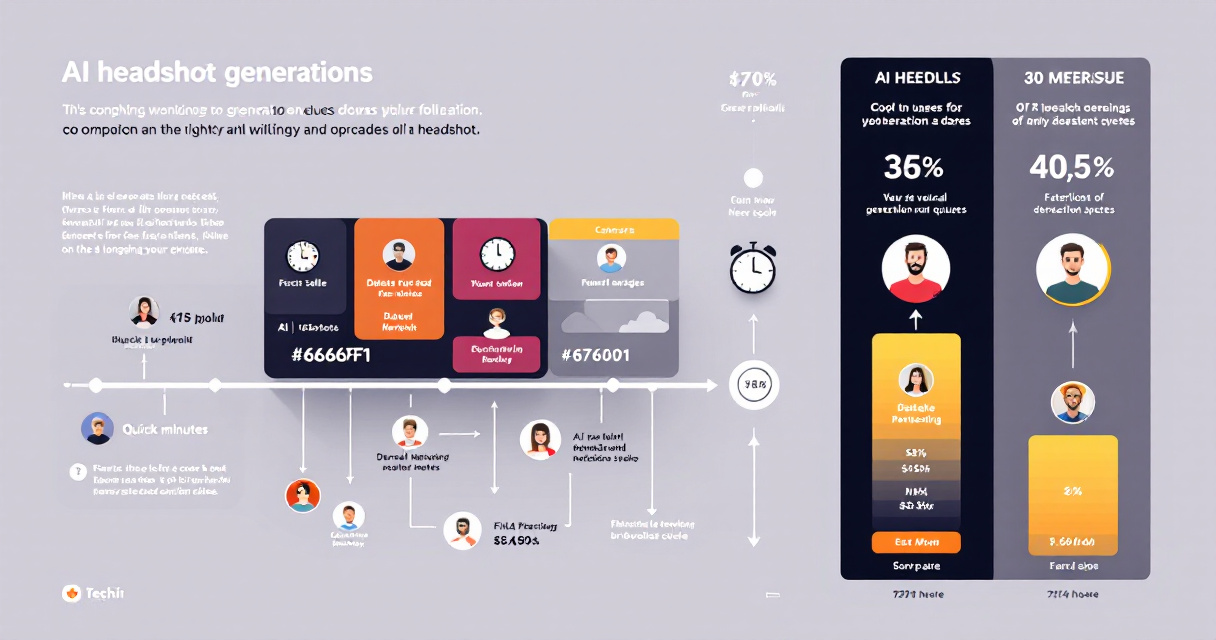
Example AI Headshot Generator Test
These tests highlight a few consistent patterns:
- Quick preview images appear in a few minutes.
- High quality professional sets require longer rendering.
- Tools with custom model training deliver the most realistic portraits.
A Critical Review of AI Headshot Quality
Independent reviews show that speed does not always equal quality. Faster tools often rely on heavy filters instead of generating new portraits from scratch, which can produce less natural results.
Privacy and Security During AI Headshot Processing
Time is not the only factor people consider when uploading personal photos. Security and data privacy also play a role in how AI services handle images.
A 2024 IEEE Access study titled Privacy and Security Concerns in Generative AI notes that generative systems often process user images on cloud servers, which raises concerns about storage and model training.
What Reputable AI Headshot Platforms Usually Do
- Delete uploaded photos after processing
- Allow users to remove datasets manually
- Avoid training global models on personal images
- Encrypt uploads during processing
Always read the data policy before uploading personal images to an AI generator.
Platforms focused on professional branding, including The Looktara Lens, typically combine AI generation with user controlled content workflows so images can be exported immediately for resumes, LinkedIn, and marketing materials.
What to Expect From AI Headshot Generation in 2027
Processing time is shrinking rapidly as AI models become more efficient. Several trends suggest that headshot generation will soon become almost instant.
Emerging Improvements in AI Image Generation
- Faster diffusion models that render images in seconds
- Edge AI processing that runs on personal devices
- Higher resolution outputs generated without additional upscaling
- Real time pose editing for dynamic headshot customization
Large multimodal systems already demonstrate huge context windows and faster reasoning speeds. Research around models like Gemini 1.5 suggests that AI systems will soon process visual data with dramatically reduced compute time.
Within a few years, generating a professional headshot pack may take under 60 seconds, especially for tools integrated directly into social platforms and professional networks.
Frequently Asked Questions About AI Headshot Generation Time
People researching AI portraits often want quick answers about timing, quality, and workflow.
How fast can AI create a headshot?
Most instant generators produce an edited portrait in under five minutes. High quality professional sets typically require 30 to 90 minutes.
Why do some AI headshot tools take an hour?
Tools that train a personalized model must analyze several selfies and generate dozens of images. That training process takes extra computing time.
Can AI headshots be generated instantly?
Some tools can generate images in seconds, but they often apply filters instead of building a detailed model of your face. Quality may be lower.
Do more photos speed up or slow down the process?
More photos usually increase training time, but they also improve accuracy and realism.
Are AI headshots faster than professional photography?
Yes. A traditional photoshoot may require scheduling, shooting, editing, and delivery, often taking several days to a week. AI tools can produce results within hours.
Conclusion
AI headshot generation now takes anywhere from a few minutes to about two hours, depending on the technology behind the platform. Instant editors deliver quick results, but tools that train personalized AI models usually create the most realistic portraits. For professionals updating LinkedIn profiles, resumes, or personal brands, the biggest advantage is speed. What once required a photographer and days of editing can now happen during a lunch break.
If you want to create polished portraits and turn them into complete branding assets, try The Looktara Lens. The platform combines AI headshot generation with tools for social graphics, profile visuals, and marketing content so your new professional image can be used everywhere immediately.