
The best AI profile picture generators now compete with casual photography for LinkedIn, founder bios, creator profiles, and dating apps because they can turn ordinary selfies into polished, consistent visual identity assets. The Looktara Studio is built for that exact use case: natural-looking profile images that can support professional presence, social channels, and personal branding without booking a full photo shoot.
AI profile picture generator: software that uses artificial intelligence to create or enhance a profile image, often from uploaded selfies, text prompts, style presets, or image reference inputs.
Avatar: in computing, an avatar is a graphical representation of a user, character, or persona, a definition aligned with Wikipedia's description of digital avatars in online communities.
What are the best AI profile picture generators in 2026?
The best AI profile picture generators in 2026 are the tools that produce realistic faces, consistent identity, useful crops, and platform-ready styles for LinkedIn, Instagram, X, YouTube, websites, and dating apps. Strong options fall into four groups: dedicated headshot studios, general image generators, avatar makers, and design platforms with AI image tools.
Dedicated profile-image tools are usually the safest choice for professional use because they focus on recognizable likeness, wardrobe, backgrounds, and camera-like realism. General image generators can be more flexible, but they often need more prompt control and manual editing.
The The Looktara Studio platform fits the dedicated profile-image category. Its strongest use case is helping professionals, founders, creators, and job seekers create a consistent set of natural profile photos for public-facing channels.
Key insight: A profile photo is not just an image. It is a trust signal, a search-result asset, and a repeated visual marker across platforms.
Quick comparison of AI profile picture tool types
| Tool type | Best fit | Main strength | Watch point |
|---|---|---|---|
| Dedicated AI headshot studio | LinkedIn, resumes, founder bios | Realistic professional styling | Needs clear input photos |
| General AI image generator | Creative avatars, concept images | Flexible prompts and styles | May require editing for likeness |
| Avatar maker | Gaming, forums, casual social | Distinct visual persona | Less suitable for hiring contexts |
| AI design platform | Banners, thumbnails, profile kits | Easy resizing and templates | Output may look template-based |
| Photo enhancer | Existing photo cleanup | Fast polish on a real image | Cannot create full variety |
For most business and career uses, realism matters more than novelty. Recruiters, clients, and investors usually expect a face that looks credible, current, and easy to recognize across platforms.
How professional profile photos differ from avatars
A professional profile photo should preserve recognizable identity, skin texture, facial proportions, and natural lighting. An avatar can be more stylized because its job is often to represent a persona rather than document a real appearance.
That distinction matters in 2026 because AI-generated identity assets now sit next to real names, professional histories, and public reputations. A founder photo on a website has a different trust requirement than a comic-style gaming avatar.
How should different platforms choose an AI profile picture style?
Platform context should guide the AI profile picture style because each channel rewards a different mix of realism, personality, crop, and brand consistency. LinkedIn needs clarity and trust, Instagram favors visual identity, X rewards recognizability at small sizes, YouTube needs creator branding, and dating apps need natural warmth.
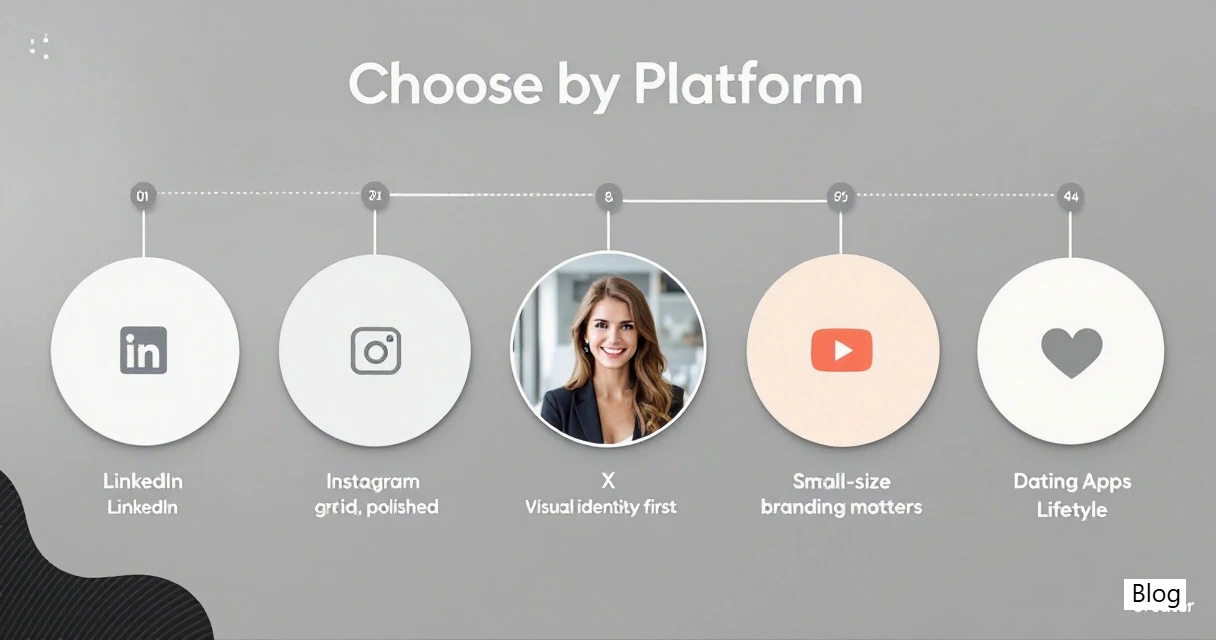
A single image can work across channels, but a small set performs better. A polished LinkedIn headshot, a slightly warmer creator image, and a casual lifestyle-style portrait can cover most professional and social needs without looking inconsistent.
Platform-by-platform recommendation table
| Platform | Best image style | Ideal goal | Practical recommendation |
|---|---|---|---|
| Realistic headshot, clean background | Trust and professionalism | Use business-casual clothing, direct eye contact, and a close crop | |
| Personal website | Founder or expert portrait | Authority and memorability | Match the site's color palette and brand tone |
| Expressive but recognizable portrait | Visual identity | Use warmer lighting and a style that fits the feed | |
| X/Twitter | High-contrast close-up | Recognition in small circles | Avoid busy backgrounds and tiny details |
| YouTube | Branded creator image | Channel recall | Keep face large, with strong lighting and repeatable colors |
| Dating apps | Natural, friendly portrait | Approachability | Choose realistic expressions and avoid over-polished results |
The best profile sets keep the same face, grooming, and general tone while adapting background, crop, and outfit to the channel. Consistency builds recall, but identical images everywhere can feel flat.
Helpful video for LinkedIn profile photo creation
The Website Learners video listed in the research data has 640,063 views, which shows strong demand for practical LinkedIn profile-photo workflows. The main lesson for 2026 is simple: business profile images should look current, realistic, and platform-native rather than like generic studio composites.
How can professionals evaluate AI profile picture quality?
Professionals should evaluate AI profile picture quality by checking likeness, realism, expression, lighting, background, crop, and use-case fit before publishing. The strongest image is not always the most polished one; it is the one that looks credible, current, and aligned with the person's role.
A reliable selection process prevents common issues such as plastic skin, mismatched eyes, unnatural teeth, distorted hands, or clothing that does not fit the target setting. The goal is professional credibility, not proof that an image was generated by advanced software.
Quality checklist before publishing
- Check likeness first: facial structure, hairline, smile, and age should match the real person.
- Review eyes and teeth: small AI errors are most visible in profile photos.
- Inspect clothing: lapels, collars, jewelry, and logos should look natural.
- Test the crop: the face should remain clear at thumbnail size.
- Compare platform fit: LinkedIn, YouTube, and dating apps need different tones.
- Avoid over-smoothing: realistic skin texture usually looks more trustworthy.
- Use a second opinion: another person can spot uncanny details faster.
A profile picture should pass a basic recognition test. If a colleague, client, or hiring manager would be surprised during a video call, the image is too far from reality.
Common mistakes to avoid
- Publishing images where the face looks younger, older, or more stylized than reality.
- Using the same dramatic studio look for every channel.
- Choosing backgrounds that compete with the face.
- Using highly edited images for roles that depend on trust, such as consulting, healthcare, finance, or leadership.
- Ignoring thumbnail performance on mobile screens.
AI image tools are improving quickly, but quality control still matters. A flawed profile image can reduce credibility faster than a simple, well-lit real photo.
Helpful video on broader AI image generator options
The Kevin Stratvert video in the research data has 463,339 views and covers the broader AI image generator category. General tools can be useful for creative identity work, but professional profile photos usually need tighter control over realism and likeness.
Which AI profile picture generator fits each user type?
The right AI profile picture generator depends on the user's public goal: hiring, selling, creating, networking, or dating. Job seekers need polished realism, founders need brand consistency, creators need repeatable visual identity, and dating app users need natural photos that still feel authentic.
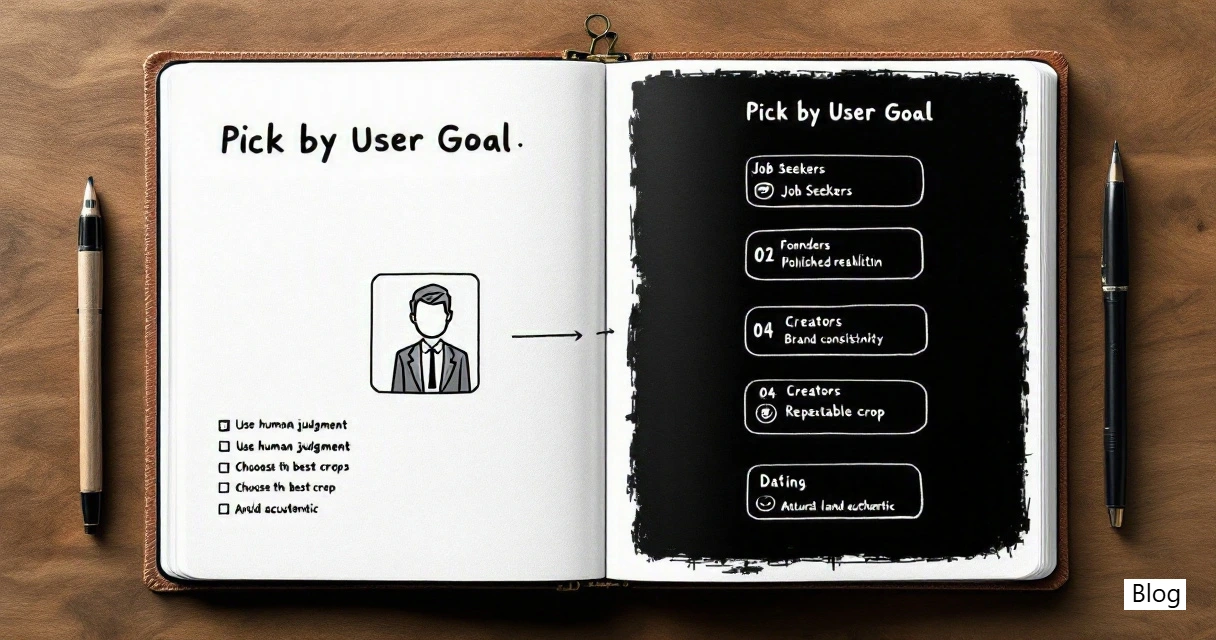
Research on generative AI in education, such as the 2023 article by Jürgen Rudolph, Samson Tan, and Shannon Tan in the Journal of Applied Learning & Teaching, examined how tools like ChatGPT challenge traditional evaluation methods, showing why AI output needs human judgment rather than blind acceptance (source). The same principle applies to profile images: the tool creates options, but human review decides which image is credible.
Best-fit recommendations by audience
| Audience | Primary need | Recommended generator type | Style guidance |
|---|---|---|---|
| Job seekers | Recruiter trust | Dedicated AI headshot studio | Clean, current, realistic, role-appropriate |
| Founders | Investor and customer confidence | Brand-aware profile image set | Consistent clothing, background, and tone |
| Startup employees | Team page consistency | Batch-style profile generator | Similar lighting and framing across staff |
| Content creators | Recognizable visual identity | AI portrait plus design platform | Repeat colors, crops, and expressions |
| Social media users | Flexible personal presence | Creative portrait generator | Mix polished and casual looks |
| Dating app users | Natural approachability | Realistic portrait tool | Warm expression, low artificial polish |
With The Looktara Studio, users in several of these groups can create a focused set of profile-ready looks instead of treating every platform as a separate design task. That matters most when a face appears across LinkedIn, a personal site, newsletters, and social profiles.
When a dedicated profile tool beats a general image generator
A dedicated profile tool is better when the output must look like a real person in a believable setting. General AI art systems are useful for creative concepts, but they can produce images that feel too cinematic, too stylized, or inconsistent across attempts.
Professional use cases usually reward restraint. A strong headshot with natural lighting and a clean crop often outperforms a dramatic AI portrait that draws attention to the technology instead of the person.
What should users expect from AI profile picture tools in 2027?
AI profile picture tools in 2027 will likely focus more on identity consistency, consent, watermarking, brand kits, and platform-specific resizing. The next competitive edge will not be simply generating attractive portraits; it will be producing trustworthy, reusable visual identity systems for real people.
A 2023 technology roadmap by Yifei Luo, Mohammad Reza Abidian, and Jong-Hyun Ahn in ACS Nano reviewed future-facing sensor technologies rather than profile photos, but it reflects a broader pattern: digital tools increasingly depend on better input signals and more adaptive systems (source). For profile generators, better inputs may mean stronger face consistency, smarter style matching, and cleaner mobile previews.
2027 buying criteria to watch
- Identity consistency: the same person should look consistent across outfits, lighting, and crops.
- Consent controls: tools should make image ownership and reuse rights clear.
- Brand presets: founders and creators will expect colors, backgrounds, and style rules.
- Platform exports: automatic sizing for LinkedIn, Instagram, X, YouTube, and websites will become more common.
- Realism controls: users will need settings that reduce over-smoothing and artificial styling.
Selection rule for 2026 and 2027: choose the tool that creates the most believable identity system, not the tool that creates the most dramatic single image.
For business use, looktara.com is most relevant when the goal is a set of natural profile images that can stay consistent across several public channels.
FAQ: common questions about AI profile picture generators
Are AI profile pictures acceptable for LinkedIn?
AI profile pictures are acceptable for LinkedIn when they look realistic, current, and professionally appropriate. The image should represent the person accurately enough that colleagues, recruiters, and clients would recognize the same person in a meeting. Over-stylized, heavily retouched, or fantasy-like portraits are a poor fit for professional networking.
How many input photos are usually best for AI profile images?
Many AI profile workflows perform better with multiple clear input photos because the system can learn facial structure, angles, hair, and expression patterns. The exact number depends on the tool. Clear selfies with varied lighting and angles generally help more than heavily filtered or old photos.
What makes an AI headshot look natural?
Natural AI headshots usually have realistic skin texture, balanced lighting, accurate eyes, normal teeth, and clothing that behaves like real fabric. A believable background also matters. The best result should look like a good photo from a professional session, not an illustration or beauty filter.
Which profile picture style works best for creators?
Creators usually need a recognizable face, a consistent color mood, and a crop that works at small sizes. A creator profile image can be more expressive than a corporate headshot, but it should still be easy to recognize across YouTube, Instagram, X, newsletters, and personal sites.
Conclusion
The best AI profile picture generators in 2026 are the ones that create credible, recognizable, platform-ready images rather than flashy portraits that only look impressive once. The smart next step is to define the target channels first, select a realistic style, run a quality checklist, and publish a small set of coordinated images.
For professionals, founders, job seekers, and creators who want consistent profile photos, The Looktara Studio offers a focused starting point. Head to looktara.com when a natural profile image set matters more than a one-off AI experiment.