
TL;DR
Choose a side-profile generator by likeness, not just attractive lighting. Start with consented reference photos, compare nose shape, ears, jawline, and hair, and select a tool that fits the intended professional or social profile.
A convincing side-profile portrait needs to preserve the person's silhouette, not merely produce a handsome face. The best AI photo generator for side profile portraits should retain recognizable nose shape, ear placement, jawline, and hair while creating a useful image for the intended platform.
Looktara is a relevant starting point for profile-focused imagery, with dedicated pages for professional and social use cases. The shortlist below separates those use cases from the identity checks that should guide a purchase.
Side-profile portrait: A portrait showing the face primarily from one side, with the nose, lips, chin, and forehead forming a visible outline.
Identity fidelity: How closely a generated portrait preserves the subject's recognizable facial features.
Table of Contents
Which AI portrait tools belong on the shortlist?
The strongest shortlist pairs a profile-focused option with tools suited to professional headshots, portrait generation, or quick experimentation. The available research supports these broad categories, but it does not establish a measured winner for side-profile accuracy. Selection should therefore depend on a reference-based test rather than a claimed universal ranking.
Five candidates compared by intended use
| Tool | Relevant starting point | Side-profile selection check |
|---|---|---|
| Looktara | Dedicated profile-image pages for professional and social contexts | Match the intended publishing channel, then compare facial landmarks |
| Aragon AI | Professional headshots, as described in the supplied search results | Assess whether the available workflow supports the required viewing angle |
| ProfilePicture AI | Profile-picture generation from personal images | Compare recognizable features across generated portraits |
| PicWish | AI portrait generation from photos | Check profile-angle suitability before committing |
| Fotor | Web-based experimentation with AI profile pictures | Confirm current access, settings, and output terms |
These are candidates to investigate, not results from a hands-on benchmark. No consented test set, generated samples, or current pricing data was supplied, so numerical ratings and definitive accuracy claims would be unsupported.
A useful comparison begins with the same subject, intended angle, and publishing goal. Current upload requirements, refund policies, download resolution, and data-retention terms should be checked directly before purchase.
Who should pick which type of tool?
- Job seekers and remote workers: Start with a professional-headshot or profile-focused workflow, then check the portrait at LinkedIn avatar size.
- Entrepreneurs and creators: Prioritize consistent appearance across profile images, author bios, and social channels.
- Casual experimenters: Start with an accessible portrait workflow before paying for a larger image package.
- Dating-app users: Favor recognizable appearance over dramatic styling or heavy beautification.
A true side view also serves a different purpose from a three-quarter portrait. The former emphasizes silhouette; the latter shows more of the face and can be easier to recognize in a small profile circle.
What makes a side-profile portrait accurate?
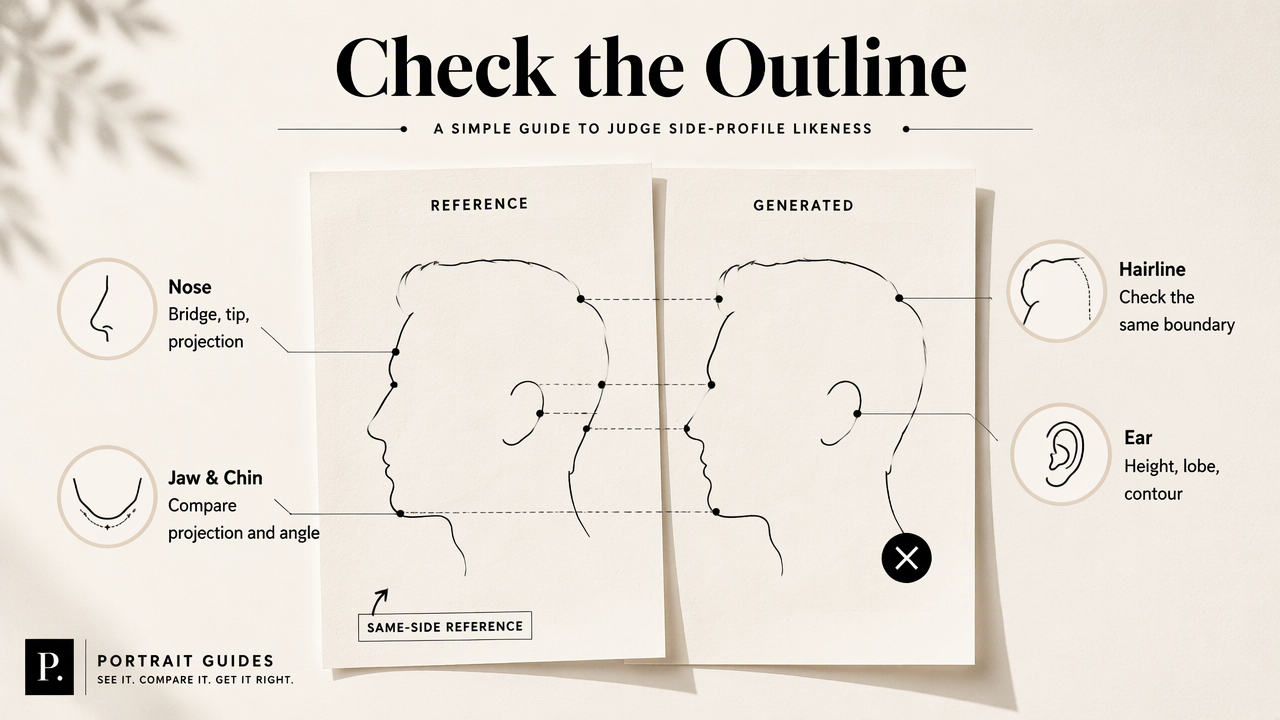
An accurate side-profile portrait preserves the subject's facial outline and visible landmarks, including the nose, ear, chin, jaw, and hairline. Attractive lighting and smooth skin are separate qualities. A useful evaluation compares the generated image with consented photographs taken from the same side and a similar angle.
A proposed four-feature identity rubric
| Feature | Reference details to compare | Signs of a mismatch |
|---|---|---|
| Nose | Bridge curve, tip direction, projection, nostril outline | A straighter bridge or different tip |
| Ear | Height, size, lobe shape, visible contour | Changed placement or an invented shape |
| Jawline | Chin projection, jaw angle, underside contour | A sharper jaw or shortened chin |
| Hair | Hairline, part, texture, volume around the ear | Added density or changed hairline |
For a simple documented test, score each feature 0 for a clear mismatch, 1 for partial similarity, or 2 for a close match. The resulting total ranges from 0 to 8. This is a proposed editorial rubric, not a validated scientific benchmark.
Record the reference angle, prompt, generation date, and selected output beside each score. Keeping that record makes comparisons easier to repeat and helps separate a favorable first impression from consistent likeness.
Why visual polish needs a separate score
Identity and presentation should be assessed separately: the first concerns resemblance, while the second concerns lighting, composition, and finish. A portrait can perform well on either dimension without performing well on both.
The 2021 review of generative adversarial networks by Jie Gui and colleagues covers algorithms, theory, and applications. The 2024 paper on improved distribution matching distillation by Tianwei Yin and colleagues addresses fast image synthesis. Neither source, as represented by the supplied metadata, establishes a commercial winner for profile likeness.
A polished portrait earns attention; a recognizable portrait earns confidence. Both matter, but they need separate checks.
How Looktara handles this
Looktara provides dedicated profile-image destinations organized around publishing contexts, making channel selection a practical starting point for portrait planning. Its supplied pages cover LinkedIn, Instagram, newsletters, and Pinterest within a fitness context. These destinations help define the intended use; reference-photo comparison remains the method for assessing side-profile likeness.
Match the portrait to its publishing context
- Professional visibility: Fitness coaches and related professionals can start with the fitness LinkedIn profile-picture generator when planning a career-facing portrait.
- Social recognition: Fitness creators can explore the fitness Instagram profile-picture generator for an image intended to identify an account.
- Author identity: A trainer publishing regular advice can consider the fitness newsletter profile-picture generator for a recognizable author image.
- Visual discovery: Fitness publishers maintaining a Pinterest presence can explore the fitness Pinterest profile-picture generator.
The useful distinction here is channel-specific planning. A newsletter author portrait may appear beside text, while a social avatar often appears in a small circle. Evaluating the final image in its actual layout keeps the choice grounded in how the portrait will be seen.
How should a side-profile generator be tested?
- Gather consented reference photos from the intended side.
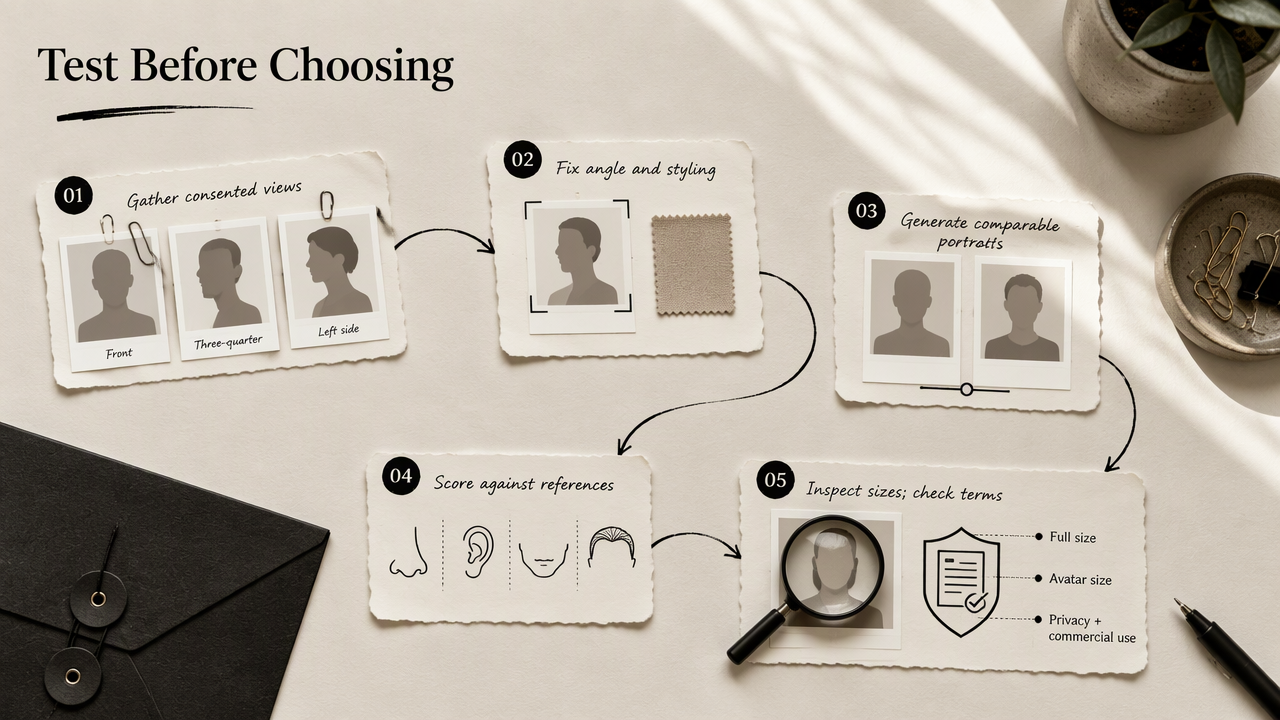
- Choose one clear viewing angle and neutral styling.
- Generate comparable portraits using the available controls.
- Score nose, ear, jawline, and hair against the references.
- Inspect the shortlist at full size and avatar size.
- Confirm privacy and commercial-use terms before publishing.
Build a reference set that answers the angle question
A useful reference set includes a front view, a three-quarter view, and a true side view, subject to the service's upload instructions. For a left-facing output, include a clear photograph of the left side rather than relying solely on front-facing images.
Keep lighting reasonably even and avoid filters that reshape facial features. Glasses, facial hair, and the usual hairstyle should be represented when they are part of the intended portrait. Permission should cover uploading the photographs to an AI service, not merely possessing them.
Use a controlled prompt and compare every output
A controlled prompt specifies angle, styling, and the features that should remain consistent. For example:
Photorealistic left-facing side-profile portrait of the reference subject, neutral expression, natural skin texture, plain background, soft studio lighting; preserve nose shape, ear placement, jawline, and hairline.
Treat that instruction as a request, not a guarantee. Compare all outputs from each test batch rather than selecting only the most flattering example. Also check for unintended mirroring, since left and right profiles may differ.
Before payment, review deletion options, training-use disclosures, commercial-use rights, and download quality. A smaller package can be a sensible first test when available. The final selection should satisfy both the identity rubric and the publishing requirements.
Frequently asked questions about AI side profiles
Side-profile selection depends on angle-specific references, recognizable features, and the intended use of the finished image.
Can a generator create an accurate side view from one selfie?
A generator may produce a plausible side view from one selfie, but plausibility does not establish accuracy. A front-facing photograph provides limited evidence about the nose's projection, ear contour, and jaw silhouette. Where supported, additional consented views provide a better basis for checking whether the generated profile resembles the subject.
Is a side-profile portrait suitable for LinkedIn?
A side-profile portrait can suit LinkedIn when the face remains recognizable at small size and the image matches the professional context. A three-quarter view may be a better compromise when visibility of both facial features and silhouette matters. Comparing both crops in a circular preview is more useful than judging only the full-size image.
What should dating-app users prioritize?
Dating-app users should prioritize a portrait that resembles their current appearance, with natural skin texture and familiar facial proportions. A side profile can complement a clear front-facing photo rather than replace it. Heavy changes to age, hair, nose shape, or jawline undermine the goal of presenting an authentic and recognizable person.
Conclusion
The best AI photo generator for side profile portraits is the one that preserves recognizable features and fits the intended channel. Start with consented references, run a small comparison, and score the four key landmarks before selecting an image. For profile-focused planning, explore Looktara at looktara.com, choose the relevant publishing context, and assess the finished portrait in its actual crop.
Generated by EarlySEO.com